
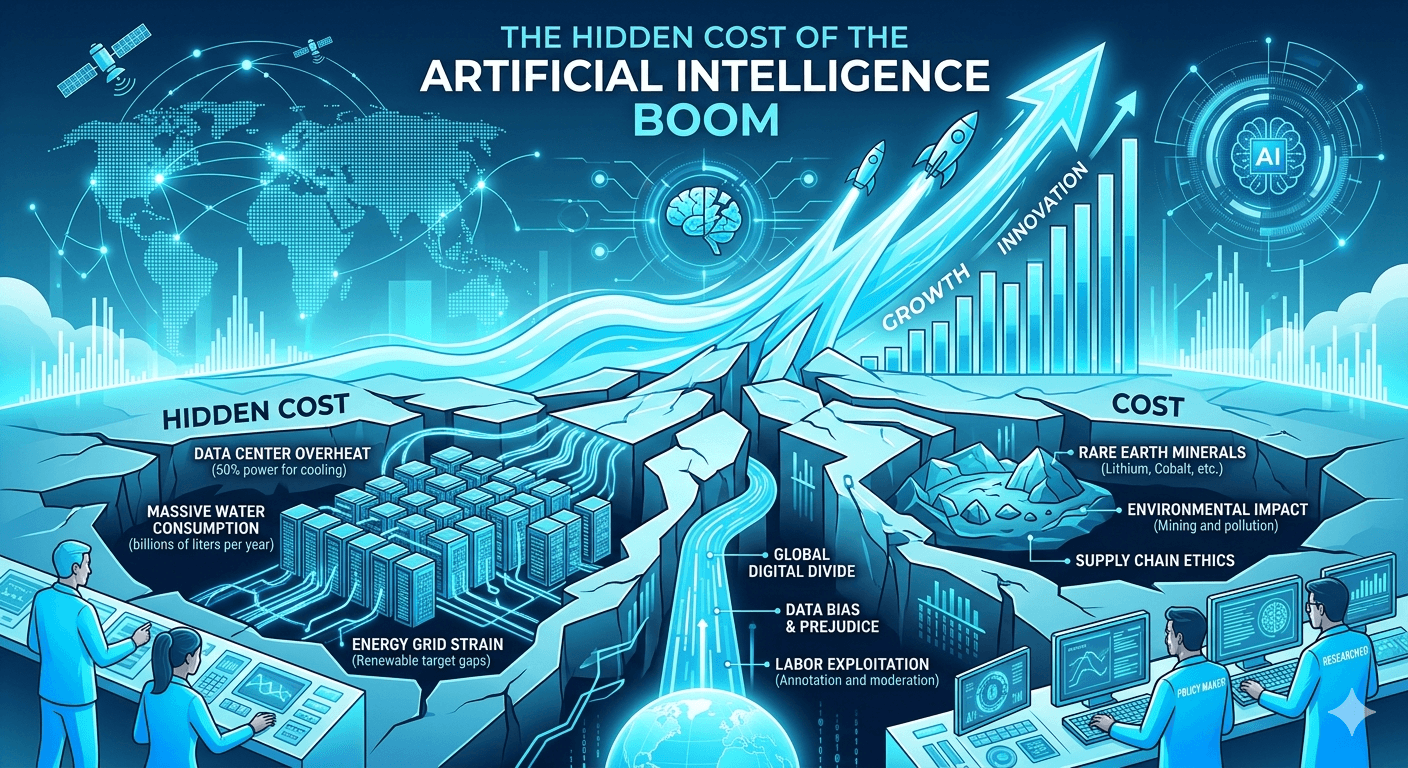
The Hidden Cost of the Artificial Intelligence Boom
Artificial intelligence is transforming the world at an incredible pace. Businesses, governments, and technology companies are investing billions into AI systems that can automate tasks, generate content, analyze data, and improve decision-making. While the AI boom is creating exciting opportunities and driving innovation across industries, there is also a growing conversation about the hidden costs behind this technological revolution. As AI becomes more powerful and widespread in 2026, many experts are warning that the true price of artificial intelligence may be much higher than most people realize.
One of the biggest hidden costs of AI is the enormous amount of computing power required to train advanced models. Modern AI systems rely on massive data centers filled with high-performance processors and specialized AI chips. Training large language models can consume huge amounts of electricity for weeks or even months. As demand for AI grows, technology companies are rapidly building new infrastructure, increasing global energy consumption and putting pressure on electrical grids in many regions.
The environmental impact of AI is becoming another major concern. Data centers require constant cooling systems to prevent overheating, which also consumes large amounts of water and energy. Experts warn that the rapid expansion of AI infrastructure could significantly increase carbon emissions if companies do not transition toward cleaner energy solutions. Although some tech companies are investing in renewable energy, the global demand for AI computing continues to rise faster than infrastructure can adapt.
Another hidden cost is the growing expense for businesses and consumers. AI tools may appear convenient, but companies are spending billions on servers, cloud systems, software development, and AI hardware. These costs are often passed down to customers through subscription services, higher product prices, or increased technology fees. Smaller businesses may struggle to compete because advanced AI systems require resources that only large corporations can afford.
The AI boom is also affecting the global job market. While artificial intelligence creates new opportunities in technology and automation, it may also replace certain types of jobs. Administrative tasks, customer support, data entry, and some creative roles are increasingly being automated by AI systems. This creates uncertainty for workers who may need to learn new skills to remain competitive in the changing digital economy.
Privacy and security risks are another hidden cost of AI expansion. Advanced AI systems require enormous amounts of data to improve performance, raising concerns about how personal information is collected, stored, and used. Cybersecurity experts also warn that AI-powered tools could be misused for deepfakes, misinformation campaigns, automated hacking, and digital fraud.
Despite these challenges, artificial intelligence continues to attract massive investment because of its enormous potential. AI is helping improve healthcare, scientific research, transportation, and productivity across countless industries. However, the hidden costs of the AI boom show that technological progress also comes with serious responsibilities.
As the world becomes increasingly dependent on artificial intelligence, governments, businesses, and society will need to find ways to balance innovation with sustainability, affordability, security, and ethical responsibility. The future of AI may depend not only on how powerful the technology becomes, but also on how wisely humanity chooses to manage its growing impact.
How useful was this post?
Click on a star to rate it!
Average rating 0 / 5. Vote count: 0
No votes so far! Be the first to rate this post.