
How Artificial Intelligence Is Transforming Modern Defense
Artificial intelligence is rapidly transforming modern defense systems and changing the future of global military technology. Governments around the world are investing billions of dollars into AI-powered defense programs, believing that artificial intelligence could become one of the most important strategic technologies of the 21st century. From autonomous drones and advanced surveillance systems to cybersecurity and battlefield analysis, AI is reshaping how nations prepare for and respond to modern threats.
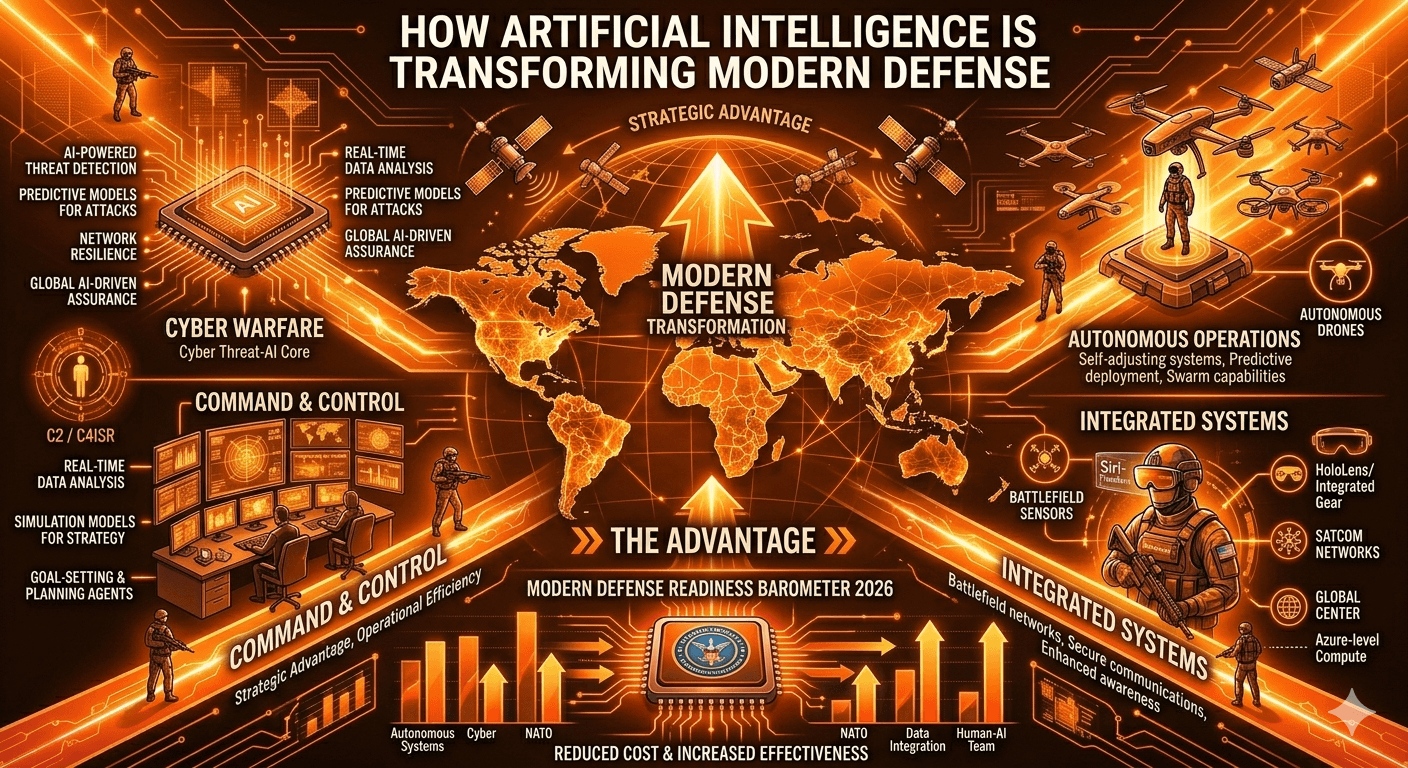
One of the biggest advantages of artificial intelligence in defense is its ability to process massive amounts of information in real time. Military organizations collect enormous quantities of data from satellites, drones, radars, sensors, and communication networks. AI systems can analyze this information much faster than humans, helping commanders make quicker and more accurate decisions during military operations. In situations where every second matters, speed and precision can provide a major strategic advantage.
Autonomous drones are among the most visible examples of AI transforming modern warfare. Many countries are developing unmanned aerial systems capable of navigation, surveillance, target recognition, and coordinated missions using artificial intelligence. These systems can operate in dangerous environments without risking human lives. Some advanced drones can even communicate with each other and adapt to changing battlefield conditions in real time.
Artificial intelligence is also becoming essential in cybersecurity and digital defense. Modern warfare increasingly involves cyberattacks targeting governments, military infrastructure, financial systems, and communication networks. AI-powered security systems can detect unusual activity, identify threats faster, and automatically respond to cyberattacks before major damage occurs. As cyber warfare grows more sophisticated, AI may become one of the most important tools for national security.
Another important area is predictive analysis. AI systems can analyze historical data, satellite imagery, and global events to predict potential threats or military movements. This allows defense organizations to improve strategic planning and reduce risks before conflicts escalate. AI is also being used for logistics, equipment maintenance, and supply chain management, helping militaries operate more efficiently and reduce operational costs.
However, the rise of AI in defense also creates serious ethical and political concerns. One of the biggest debates involves autonomous weapons systems capable of making decisions without direct human control. Critics warn that allowing machines to decide when to use force could create dangerous and unpredictable situations. International organizations and human rights groups are calling for regulations to prevent fully autonomous lethal weapons from becoming widespread.
There are also concerns about a global AI arms race. Major powers including the United States, China, Russia, and European nations are aggressively investing in military AI technologies. Experts fear that competition between countries could accelerate the development of increasingly advanced autonomous systems without sufficient international oversight or safety agreements.
Despite these concerns, artificial intelligence is expected to become deeply integrated into modern defense strategies over the coming years. AI technologies offer faster decision-making, stronger cybersecurity, improved efficiency, and advanced military capabilities that traditional systems cannot match. As warfare evolves in the digital age, artificial intelligence is no longer viewed as futuristic technology — it is becoming a central part of modern defense and global security.