
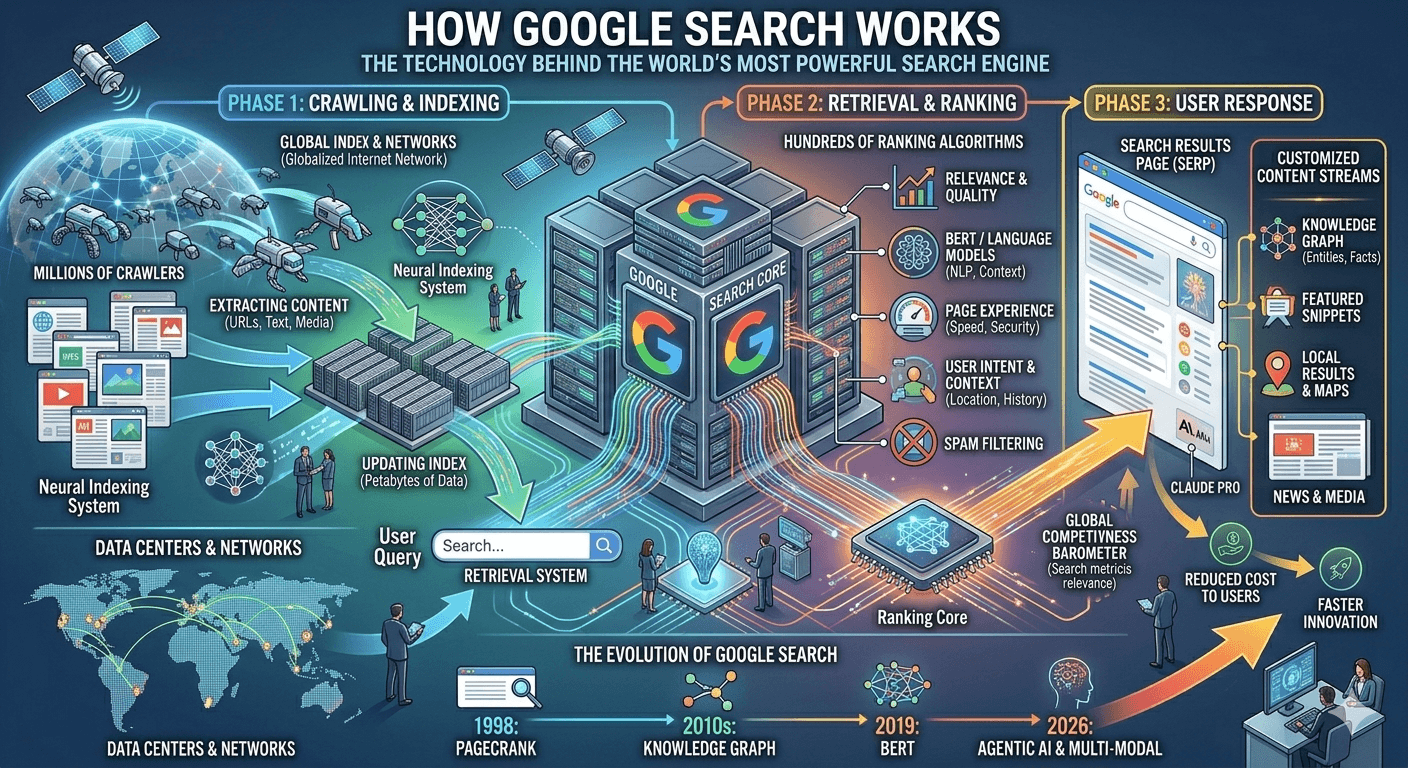
How Google Search Works: The Technology Behind the World’s Most Powerful Search Engine
Google Search is the world’s most widely used search engine, processing billions of queries every day and delivering results in a fraction of a second. Behind its simple search box lies one of the most advanced and complex technologies ever built, combining web crawling, indexing, ranking algorithms, and artificial intelligence to organize the entire internet.
At the core of Google Search is a system called web crawling. Google uses automated programs known as “bots” or “spiders” to continuously scan websites across the internet. These crawlers follow links from page to page, discovering new content and updating existing information. Once a page is found, it is analyzed and stored in a massive database called the index.
The index is essentially a huge digital library of the internet. Instead of searching the entire web in real time, Google searches through this pre-built index, which allows results to appear almost instantly. Every page is categorized based on keywords, content quality, site structure, and relevance.
When a user types a query, Google’s ranking algorithm gets to work. This system evaluates hundreds of factors to decide which pages should appear first. These factors include keyword relevance, website authority, page speed, mobile usability, and user experience. Links from other trusted websites also play a major role, as they help determine the credibility of a page.
In recent years, artificial intelligence has become a major part of Google Search. Machine learning systems like RankBrain and other AI models help Google understand the meaning behind search queries, even when users don’t type exact keywords. This allows the search engine to interpret intent rather than just matching words, making results more accurate and useful.
Another important development is the integration of generative AI into search. Instead of only showing links, Google can now provide direct answers, summaries, and contextual information at the top of search results. This makes it easier for users to find information quickly without needing to click through multiple websites.
Google Search also personalizes results based on location, language, and search history. For example, two people searching the same term may see different results depending on where they are and what they have searched before. This personalization helps deliver more relevant and useful information to each user.
Overall, Google Search works through a powerful combination of crawling, indexing, ranking, and artificial intelligence. It constantly evolves to keep up with the growing size of the internet and the changing needs of users. As AI continues to advance, search engines like Google are becoming smarter, faster, and more intuitive, shaping the way people access information in the digital age.