
Why AI Is Taking Over the Sports Industry in 2026
Artificial intelligence is rapidly transforming the sports industry in 2026, changing the way athletes train, teams compete, and fans experience their favorite games. From football and Formula 1 to tennis and basketball, AI technology is becoming one of the most important tools in modern sports. Teams, coaches, broadcasters, and even referees are now relying on advanced algorithms and real-time data analysis to improve performance and make smarter decisions.
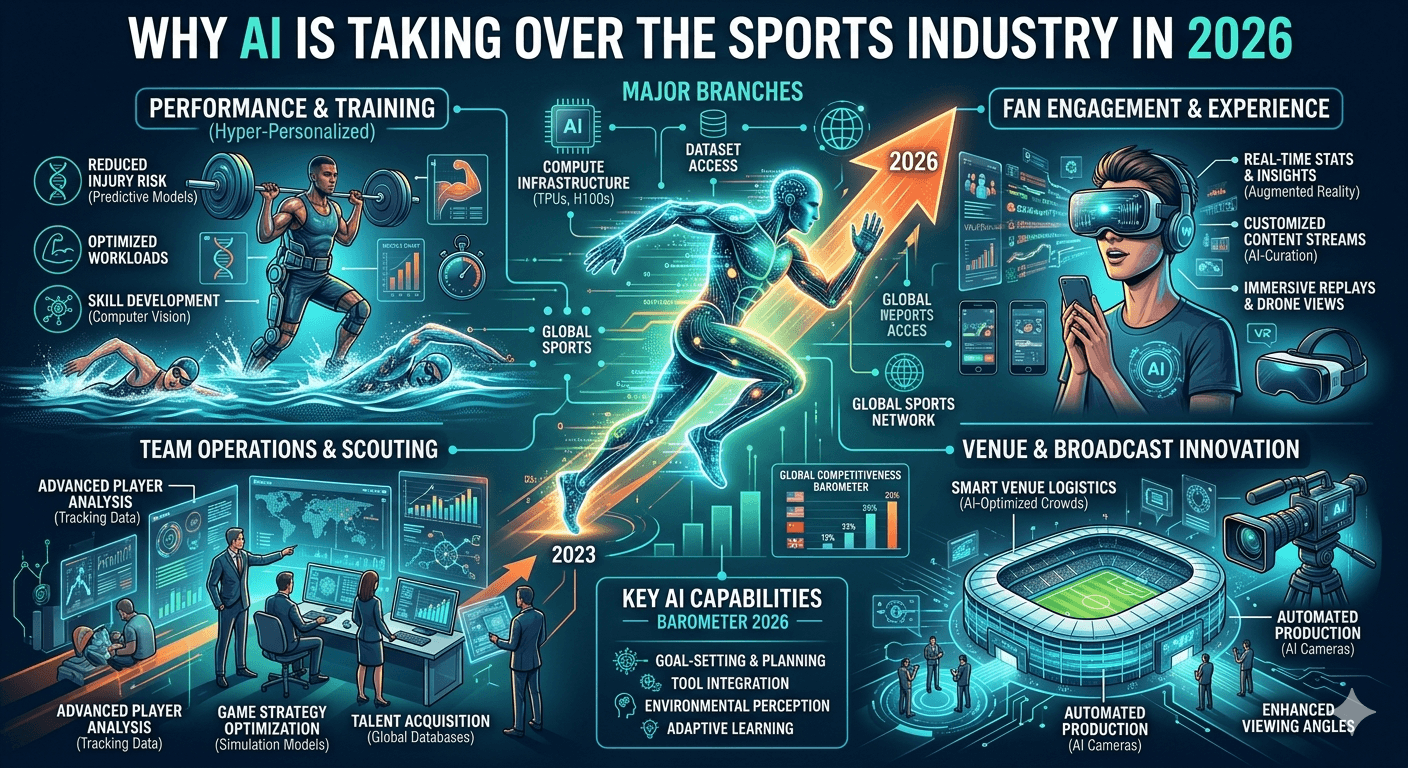
One of the biggest reasons AI is taking over sports is its ability to process huge amounts of data in seconds. Professional teams collect information from wearable devices, cameras, GPS trackers, and match statistics. AI systems analyze this data to discover patterns that humans may miss. Coaches can now understand player fatigue, injury risks, movement efficiency, and tactical weaknesses more accurately than ever before. This allows athletes to train smarter, recover faster, and avoid serious injuries.
AI is also changing how games are played and managed. In Formula 1, teams use artificial intelligence to simulate race strategies and predict tire performance during races. Football organizations like FIFA are introducing AI-powered referee systems and smart ball technologies to improve decision-making accuracy. Baseball leagues are testing AI-assisted strike zone systems, while tennis tournaments use AI to create instant highlights and personalized fan experiences.
Another major area where AI is growing is sports broadcasting and fan engagement. Streaming platforms and sports media companies now use AI to recommend highlights, create automated commentary, and provide real-time statistics during live events. Fans can receive personalized content based on their favorite players and teams. Some stadiums are even becoming “smart stadiums,” using AI for crowd management, security, ticketing, and interactive experiences.
Sports organizations are also investing heavily in AI because it provides a competitive advantage. Teams that use machine learning and predictive analytics can make faster decisions in scouting, player recruitment, and game tactics. AI helps clubs discover young talent by analyzing thousands of matches worldwide. Smaller teams can now compete more effectively by using data-driven strategies that were once available only to elite organizations.
However, the rise of AI in sports also creates debates. Some people worry that technology could reduce the human element of competition. Others question whether AI referees and automated systems may eventually replace traditional officials. Despite these concerns, most experts believe AI will continue to grow because it improves fairness, efficiency, and entertainment.
In 2026, artificial intelligence is no longer just an experimental tool in sports — it is becoming a core part of the industry. As technology continues to evolve, AI will likely shape the future of training, competition, and fan experiences for years to come.