
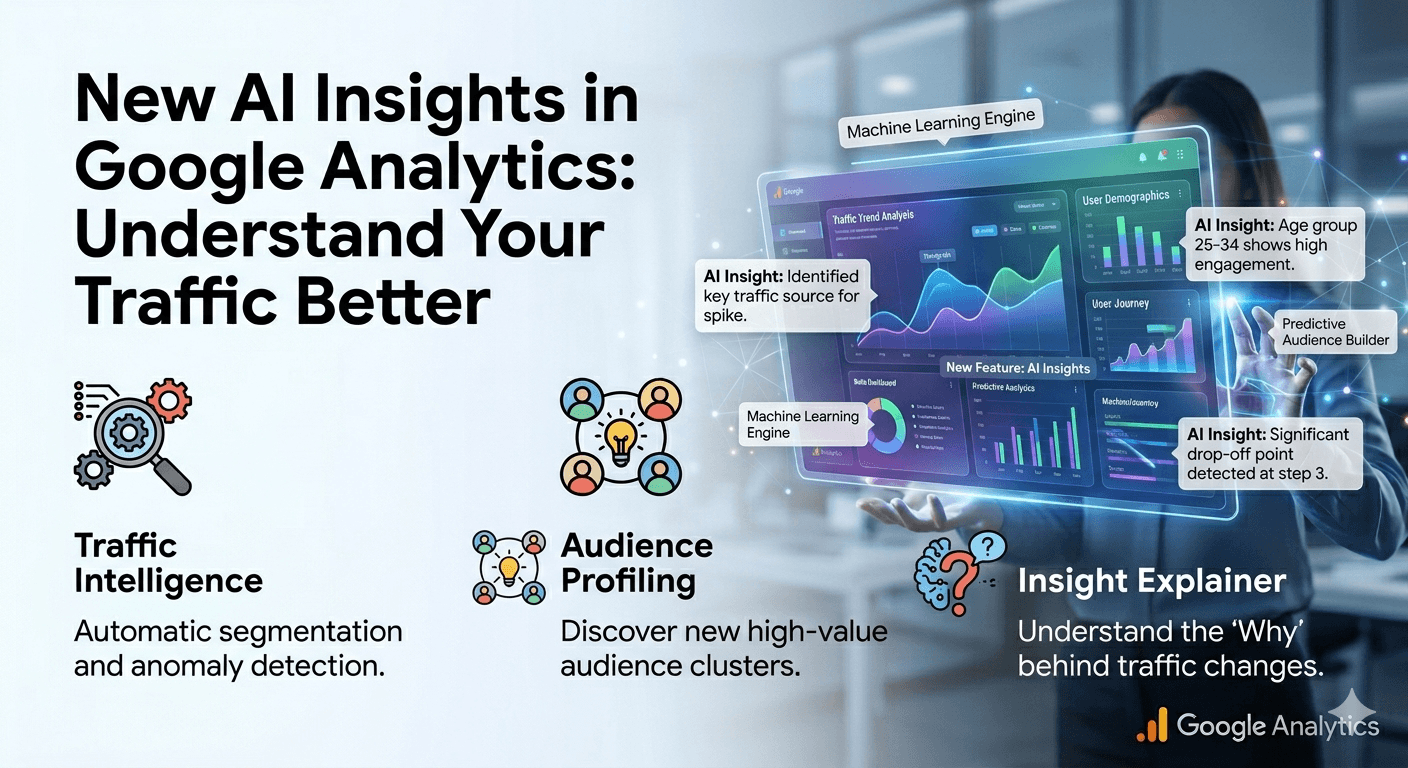
New AI Insights in Google Analytics- Understand Your Traffic Better
In 2026, artificial intelligence has become the core engine behind modern web analytics, and Google Analytics is at the center of this transformation. Instead of manually digging through dashboards and reports, marketers now receive automated, AI-generated insights that explain what is happening on their website and why it matters.
One of the biggest upgrades is the introduction of AI-powered insight detection. Google Analytics now continuously analyzes traffic patterns and automatically highlights meaningful changes such as sudden drops in conversions, unexpected traffic spikes, or shifts in user behavior. Instead of searching for problems, the system brings them directly to your attention in real time.
A key feature driving this change is natural language AI assistance. Users can now ask questions like “Why did my organic traffic decrease this week?” or “Which channel brings the highest quality users?” and receive instant explanations backed by data visualizations. This removes the need for advanced reporting skills and makes analytics accessible even for non-technical users.
Another major improvement is predictive insight modeling. Google Analytics uses machine learning to forecast future user behavior, such as purchase probability, churn risk, and engagement likelihood. This allows businesses to focus not only on what already happened, but also on what is likely to happen next. Marketers can proactively adjust campaigns, improve retention strategies, and target high-value audiences before they convert or leave.
AI insights also enhance traffic segmentation. Instead of manually building audiences, the system now automatically identifies meaningful user groups such as “high-intent visitors,” “first-time converters,” or “at-risk customers.” These segments are continuously updated based on live behavioral data, making targeting more dynamic and accurate.
Another important development is anomaly detection. Google Analytics AI now flags unusual patterns without requiring custom alerts. For example, if a landing page suddenly underperforms or a campaign unexpectedly outperforms expectations, the system highlights it and suggests possible causes such as channel shifts, device changes, or content performance issues.
Integration with Google’s ecosystem, including advertising platforms, further strengthens AI insights. Data from campaigns is combined with on-site behavior to provide a full-funnel understanding of performance. This helps marketers see not just clicks and impressions, but actual user quality and conversion outcomes.
Overall, AI insights in Google Analytics are transforming how businesses understand their digital traffic. Instead of manually interpreting complex datasets, marketers now receive clear, actionable explanations powered by machine learning. This shift turns analytics from a reporting tool into a strategic decision-making assistant, helping businesses move faster, optimize smarter, and understand their audience at a much deeper level.