
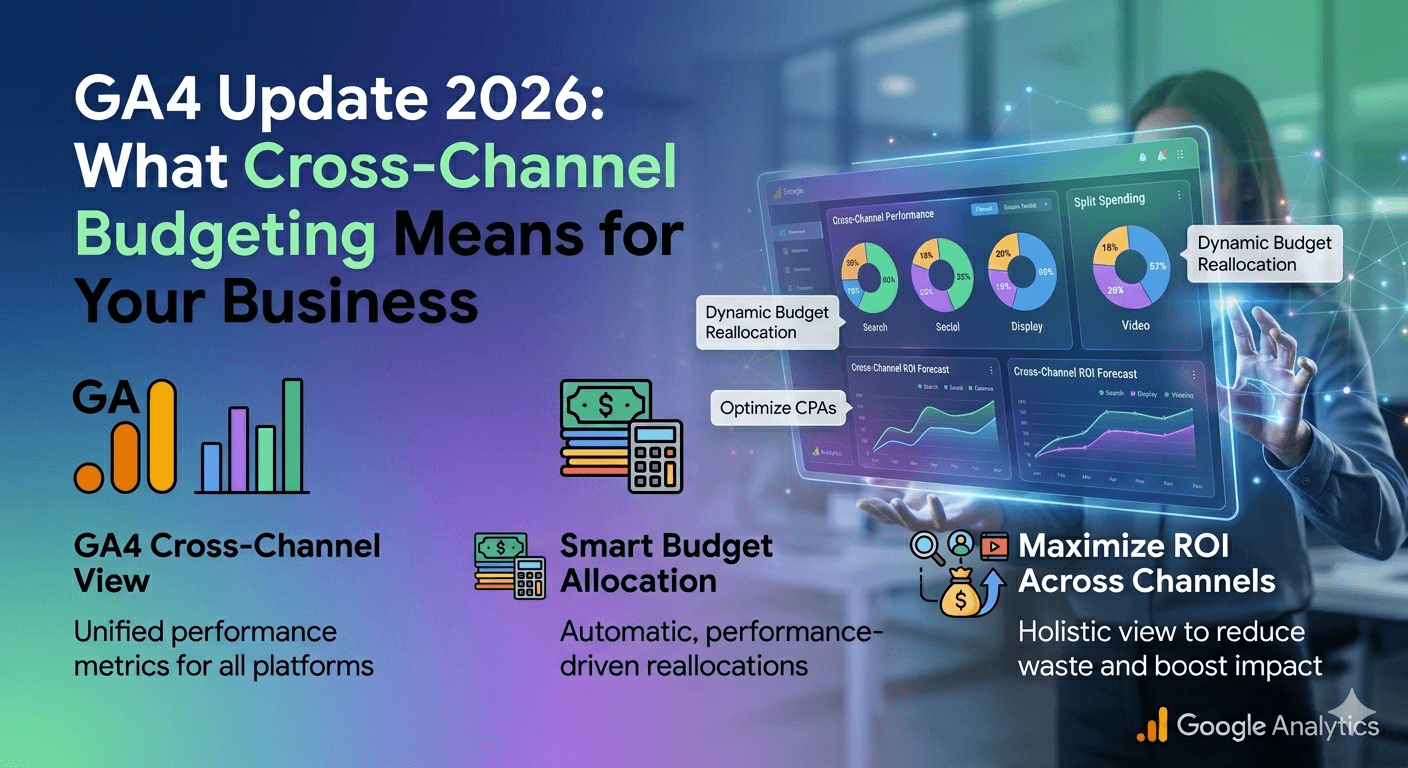
What Cross-Channel Budgeting Means for Your Business
Cross-channel budgeting refers to the practice of allocating and optimizing marketing spend across multiple platforms such as search, social media, display, video, and email—based on overall performance rather than treating each channel in isolation. In 2026, this approach has become essential because customer journeys are no longer linear. Users interact with multiple touchpoints before converting, and businesses need a unified view of how each channel contributes to revenue.
Traditionally, companies would manage budgets separately for platforms like Google Ads, Meta Ads, or TikTok advertising via TikTok for Business. Each channel had its own KPIs, reporting structure, and optimization strategy. The problem with this siloed approach is that it often leads to inefficient spending—channels that assist conversions may be undervalued, while others that capture the final click get too much credit.
Cross-channel budgeting solves this by focusing on total marketing performance instead of individual channel performance. It uses unified analytics systems like Google Analytics to track how users move across platforms before converting. For example, a user might first discover a brand through social media, later search on Google, and finally convert through a retargeting ad. Cross-channel budgeting ensures each step is recognized and valued in the allocation of spend.
One of the key benefits of this approach is smarter budget distribution. Instead of setting fixed monthly budgets per platform, businesses can dynamically shift spend toward the channels that generate the highest overall return on investment. This often means increasing investment in assist channels (like video or awareness campaigns) that indirectly drive conversions but were previously undervalued.
Another important aspect is improved attribution. Modern systems use data-driven models that assign credit across multiple touchpoints. This allows marketers to understand not just which channel closed the sale, but which channels influenced the decision-making process. As a result, budgeting becomes more accurate and aligned with real customer behavior.
Cross-channel budgeting also improves scalability. As businesses grow, customer journeys become more complex, involving multiple devices and platforms. A unified budget strategy ensures that scaling marketing efforts does not lead to wasted spend or duplicated targeting.
Finally, this approach encourages better strategic decision-making. Instead of asking “Which channel performs best?”, businesses start asking “How do all our channels work together to drive growth?” This shift leads to more efficient marketing ecosystems, stronger ROI, and better long-term planning.
In summary, cross-channel budgeting is about breaking down silos and managing marketing as one connected system. It ensures every platform contributes fairly to the customer journey and helps businesses invest smarter, not just more.