
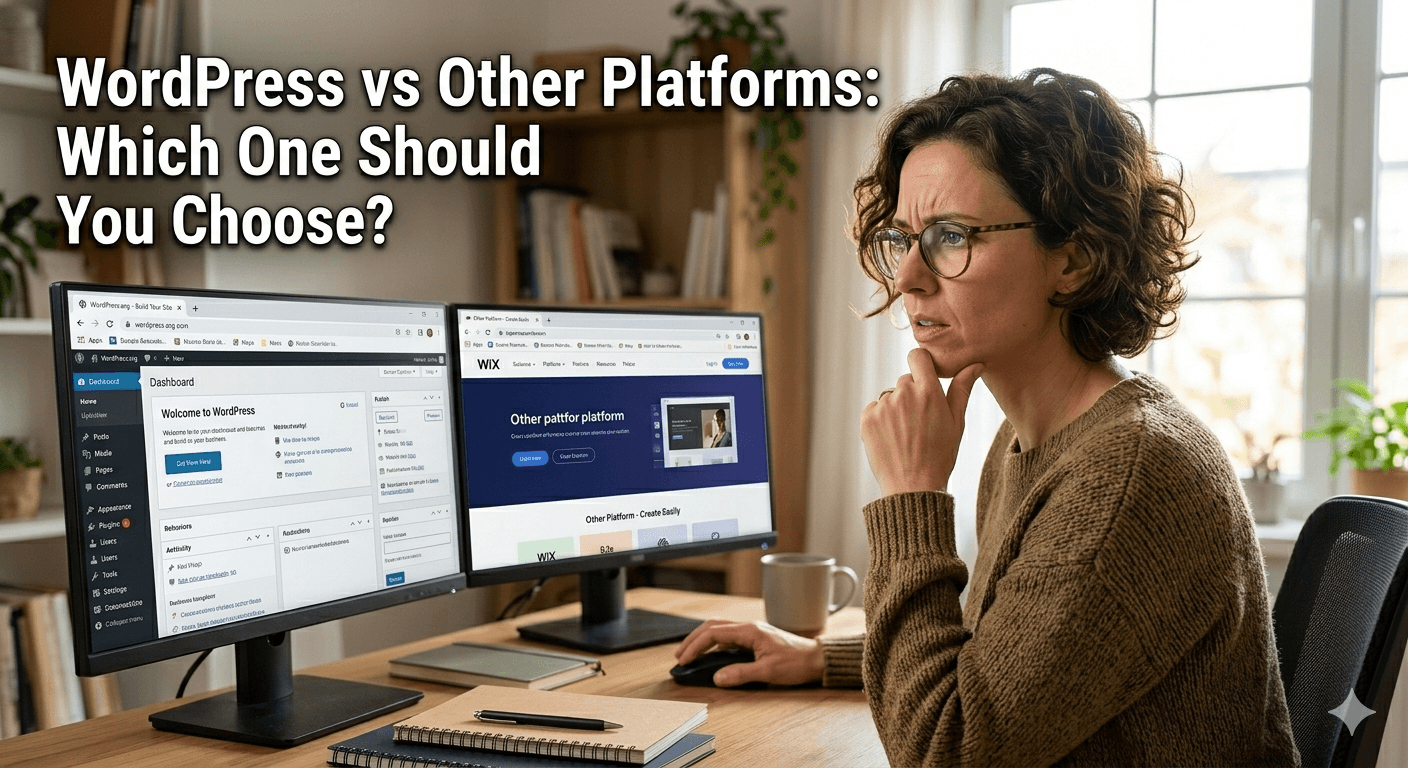
WordPress vs Other Platforms Which One Should You Choose
Choosing the right platform for your website is one of the most important decisions you’ll make online. It affects how easily you can manage your site, how much you can customize it, and how well it can grow in the future. Among all options, WordPress remains the most popular choice, but it’s not the only one. Platforms like Shopify, Wix, and Webflow also offer strong alternatives depending on your goals.
WordPress: Flexibility and Full Control
WordPress is an open-source platform, which means you have complete control over your website. You can customize everything—from design to functionality—using themes and plugins. It is ideal for blogs, business websites, portfolios, and even large eCommerce stores. With plugins like Elementor, you can design pages visually without coding, making it beginner-friendly yet powerful.
One of WordPress’s biggest strengths is scalability. You can start small and grow into a complex website without switching platforms.
Wix: Simplicity for Beginners
Wix is a website builder focused on ease of use. It offers drag-and-drop design tools, making it very beginner-friendly. However, it has limitations in customization and flexibility compared to WordPress. It’s a good choice for small personal websites or simple business pages, but less suitable for long-term scaling.
Shopify: Best for Online Stores
If your main goal is eCommerce, Shopify is a strong competitor. It is designed specifically for selling products online and includes built-in tools for payments, inventory, and shipping. While powerful, it is less flexible than WordPress in terms of design and content management. It’s great for focused online stores but not ideal for complex content websites.
Webflow: Design Freedom for Professionals
Webflow is a modern platform that combines visual design with advanced customization. It offers more design control than Wix but requires a steeper learning curve. It is often used by designers and agencies who want pixel-perfect websites without relying on templates.
Performance, SEO, and Growth
When it comes to SEO and long-term growth, WordPress has a clear advantage. With tools like Yoast SEO or Rank Math, users can fully optimize their websites for search engines. Combined with performance plugins like WP Rocket, WordPress websites can be extremely fast and SEO-friendly.
Other platforms like Wix and Shopify offer built-in SEO tools, but they are more limited in customization and technical control.
Final Thoughts
The best platform depends on your goals. If you want full control, long-term flexibility, and strong SEO potential, WordPress is the best choice. If you want simplicity, Wix may be enough. For online stores, Shopify is highly efficient, and for designers, Webflow offers creative freedom.
However, for most users who want to build a scalable, professional, and future-proof website, WordPress remains the most powerful and versatile option in 2026.entum. Diam quam quam suspendisse vitae consequat phasellus non odio morbi bibendum odio libero.