
From Chatbots to Smart Cities: The Rise of Artificial Intelligence Technology
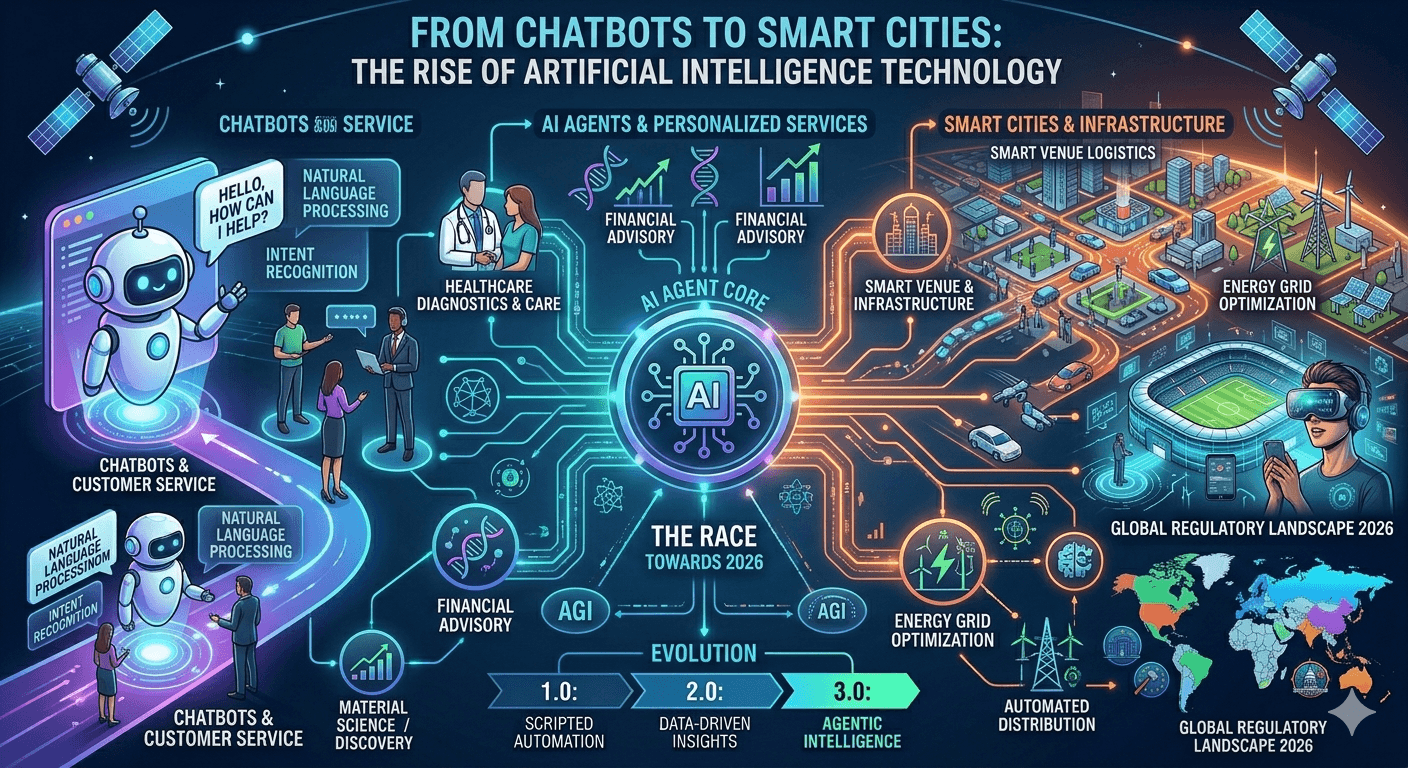
Artificial intelligence has evolved from simple conversational tools into a powerful global technology shaping entire cities, industries, and economies. The journey from early chatbots to today’s advanced smart city systems shows just how quickly AI has grown and how deeply it is now integrated into modern life. What once started as basic automated responses has transformed into intelligent systems capable of learning, adapting, and making complex decisions in real time.
In the early stages, chatbots were designed mainly for customer support. They could answer simple questions, provide basic information, and follow predefined scripts. While limited in capability, they introduced the idea of machines interacting with humans in natural language. Over time, advances in machine learning and natural language processing allowed chatbots to become more intelligent, conversational, and context-aware. Today’s AI assistants can understand intent, maintain conversations, and even perform tasks such as writing content, scheduling meetings, and analyzing data.
As AI technology improved, its applications expanded far beyond chatbots. Businesses began using artificial intelligence for automation, analytics, and decision-making. Healthcare systems adopted AI for diagnostics and medical research. Financial institutions started using AI to detect fraud and manage risk. This rapid expansion set the foundation for even more ambitious applications — including smart cities.
Smart cities represent one of the most advanced uses of artificial intelligence today. These cities use AI-powered systems to manage traffic, energy consumption, public safety, and infrastructure. Sensors and connected devices collect real-time data from roads, buildings, and public services. AI then analyzes this information to optimize urban life. For example, traffic lights can adjust automatically based on congestion levels, reducing delays and improving transportation efficiency. Energy systems can balance electricity usage to reduce waste and lower costs.
Public safety is also enhanced through AI-driven surveillance and emergency response systems. Smart monitoring tools can detect unusual activity, predict potential risks, and help authorities respond faster during emergencies. In addition, waste management systems use AI to optimize collection routes, while environmental monitoring tools track air quality and pollution levels to support healthier living conditions.
The rise of smart cities also highlights the growing importance of data. Every connected device contributes to a vast network of information that AI uses to improve city operations. However, this also raises concerns about privacy, data security, and ethical use of technology. Balancing innovation with responsible governance has become a key challenge for governments and technology developers.
From simple chatbots to fully connected smart cities, artificial intelligence has undergone a remarkable transformation. It is no longer just a tool for conversation or automation — it is becoming the backbone of modern infrastructure. As AI continues to evolve, its role in shaping smarter, more efficient, and more connected cities will only grow stronger, redefining how people live and interact with their environment.