
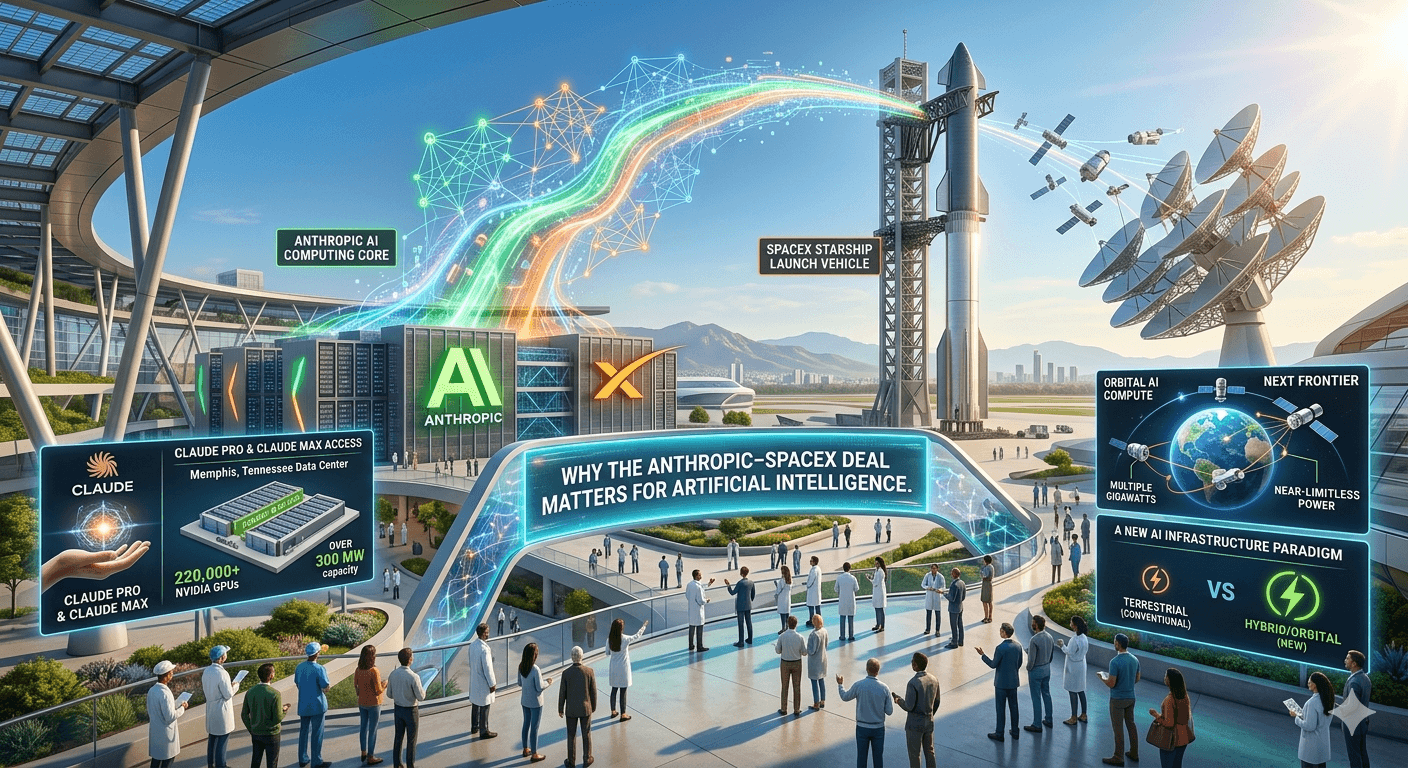
Why the Anthropic–SpaceX Deal Matters for Artificial Intelligence
The partnership between Anthropic and SpaceX is becoming one of the most talked-about developments in the artificial intelligence industry in 2026. As AI companies race to build more powerful models, the demand for computing power, infrastructure, and energy has reached unprecedented levels. This deal represents more than just a business partnership — it signals a major shift in how the future of AI may be built and controlled.
Artificial intelligence systems require enormous amounts of computing resources to train advanced models. Modern AI models process trillions of data points and require thousands of high-performance chips working together for weeks or even months. Because of this, AI companies are searching for reliable infrastructure partners that can provide fast communication networks, scalable data systems, and long-term technological support. This is where SpaceX enters the picture.
SpaceX is already one of the world’s most advanced technology companies, with expertise in satellite communications, global internet infrastructure, and large-scale engineering. Through its Starlink satellite network and massive computing capabilities, SpaceX can provide the kind of infrastructure needed to support next-generation AI systems. Anthropic, known for developing advanced AI assistants and large language models, gains access to a powerful technological ecosystem that could dramatically accelerate its growth.
The partnership also highlights the growing “AI infrastructure war” happening across the tech industry. Companies like OpenAI, Google, Microsoft, Amazon, and Meta are investing billions into data centers, AI chips, and cloud systems. Access to computing power is becoming just as important as building the AI models themselves. Experts now believe the companies that control infrastructure may ultimately control the future direction of artificial intelligence.
Another important reason this deal matters is the increasing connection between AI and global communications. Satellite networks like Starlink could help AI systems operate faster and reach remote regions around the world. AI-powered services may soon depend on space-based infrastructure for communication, automation, and real-time processing. This creates opportunities for industries such as healthcare, transportation, defense, and scientific research.
The partnership also raises questions about competition and AI safety. As major technology companies become more powerful, governments and regulators are watching closely. Some experts worry that only a few companies may gain control over the most advanced AI systems and infrastructure. Others believe partnerships like this are necessary to keep innovation moving forward in a highly competitive global market.
In many ways, the Anthropic–SpaceX deal represents the next stage of the AI revolution. Artificial intelligence is no longer only about software and chatbots — it is now deeply connected to energy, infrastructure, cloud computing, and even space technology. As AI continues to evolve, partnerships between advanced technology companies could reshape the future of the entire digital world.