
Google Search Updates Explained: What’s New in Ranking, SEO, and AI Results
Google Search is constantly evolving, and in 2026 the latest updates are reshaping how websites rank, how SEO works, and how users interact with search results. As the internet continues to grow, Google is using more advanced artificial intelligence and machine learning systems to improve the quality, relevance, and speed of search results. These updates are especially important for website owners, marketers, and content creators who rely on search visibility.
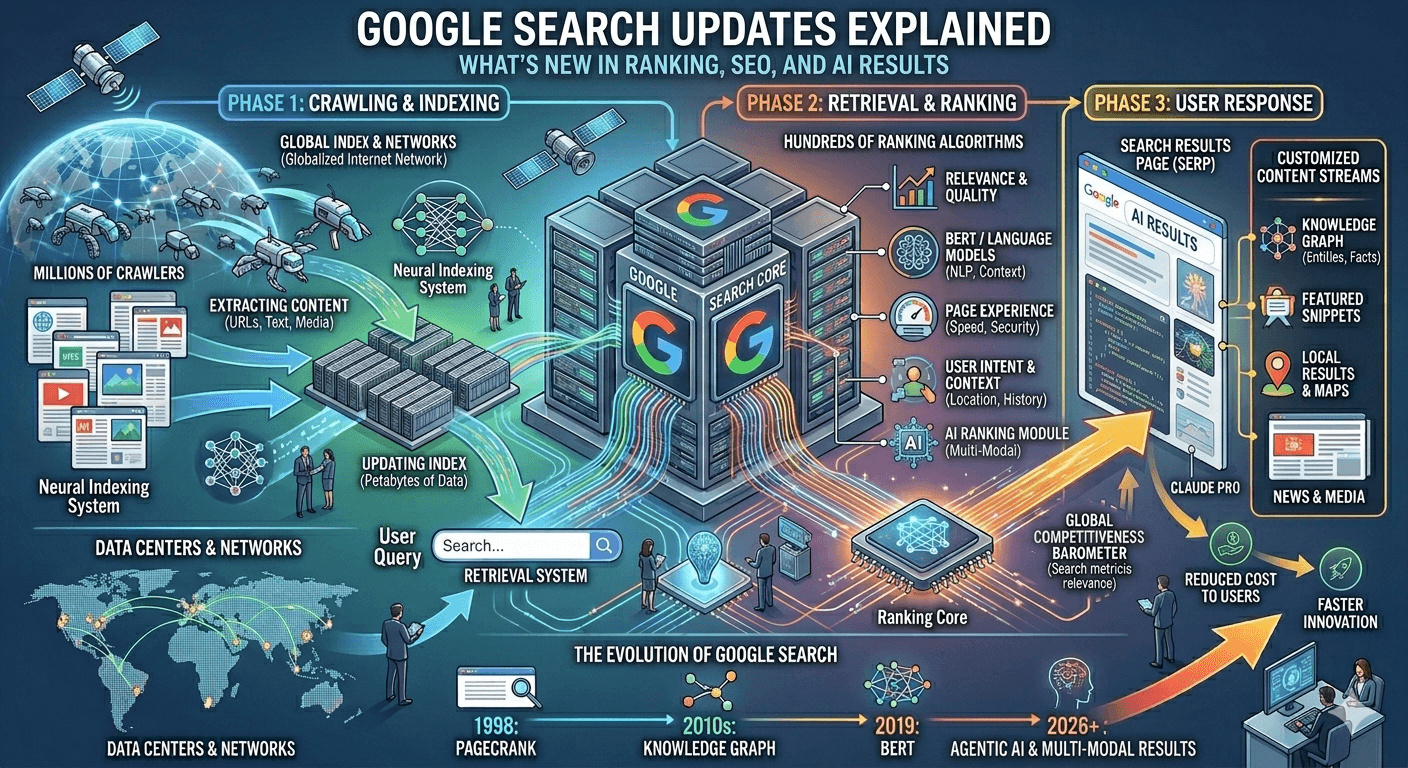
One of the biggest changes in recent Google updates is the increased role of artificial intelligence in ranking systems. Instead of relying only on traditional keyword matching, Google now focuses heavily on understanding user intent. This means the search engine tries to interpret what a user actually wants, even if the query is vague or conversational. AI models help analyze context, semantics, and content quality to deliver more accurate answers.
Another important update is the improvement in content quality evaluation. Google’s ranking systems now prioritize helpful, original, and well-structured content. Websites that provide clear answers, expert insights, and real value are more likely to rank higher. Thin or low-quality content, especially pages created only for SEO purposes without useful information, are being pushed down in search results.
Search Engine Optimization (SEO) has also changed significantly. Traditional strategies like keyword stuffing or backlink manipulation are becoming less effective. Instead, modern SEO focuses on user experience, page speed, mobile optimization, and content relevance. Websites that load quickly, work well on mobile devices, and provide easy navigation tend to perform better in rankings.
AI-powered search results are another major update. Google is increasingly using generative AI to provide direct answers at the top of search pages. Instead of only showing a list of links, users may now see summarized responses, explanations, or step-by-step guides generated by AI. This shift is changing how people interact with search engines and reducing the need to click multiple websites for information.
Google has also improved its ability to detect spam and low-quality content. New algorithm updates focus on identifying misleading information, duplicate content, and websites that try to manipulate rankings. This helps ensure that trustworthy and authoritative sources appear higher in search results.
Local search and personalized results are becoming more advanced as well. Google now considers user location, preferences, and previous search behavior to deliver more relevant results. This is especially important for businesses that rely on local customers.
Overall, the latest Google Search updates show a clear direction toward smarter, AI-driven search experiences. Ranking is no longer just about keywords — it is about quality, relevance, and user satisfaction. As artificial intelligence continues to evolve, SEO strategies must adapt to keep up with a search engine that is becoming more intelligent, predictive, and user-focused than ever before.